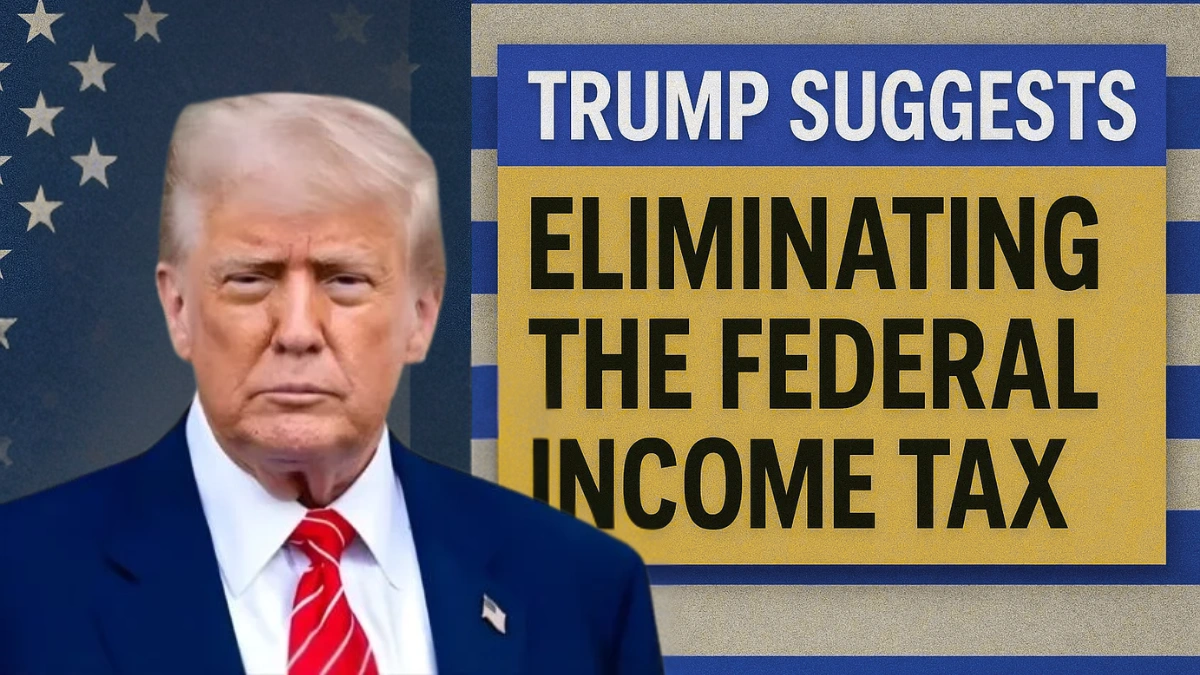
Former U.S. President Donald Trump has officially suggested eliminating the federal income tax, a move that could significantly affect millions of American workers and the overall economy. If implemented, this proposal would fundamentally change the U.S. tax system, increase disposable income for workers, and alter government revenues across multiple sectors.
Overview of the Proposal
The proposal involves completely removing the federal income tax, which currently funds critical government programs and infrastructure. Supporters argue that eliminating the tax would give workers more financial freedom and stimulate consumer spending. However, critics warn it could create large fiscal gaps and reduce funding for essential social services.

Potential Impact on Workers
Eliminating federal income tax would directly increase the take-home pay of millions of Americans. Middle- and lower-income workers could experience significant financial relief, allowing more money for household expenses, savings, or investments. However, indirect effects may arise if government services are reduced or alternative taxation methods are introduced.
| Aspect | Current Situation | Proposed Change | Potential Impact |
|---|---|---|---|
| Federal Income Tax | Progressive tax ranging 10%–37% based on income | Eliminated entirely | Workers retain full income, more disposable income |
| Revenue Source | Largest source of federal revenue (~50% of total) | Revenue reduced significantly | Potential budget deficits or cuts to federal programs |
| Impact on Workers | Taxes deducted from salaries | No federal income tax deduction | Increased take-home pay for all workers |
| Social Programs | Funded by federal tax revenues | Could face reduced funding | Programs like Social Security, Medicare may require alternate funding |
| Consumer Spending | Limited by tax deductions | Likely to increase due to higher disposable income | Possible short-term economic boost |
Economic Implications
While removing federal income tax could boost consumer spending and stimulate economic growth, it would significantly impact federal revenue. Essential programs like Social Security, Medicare, defense, and education are funded by these taxes. Reductions in revenue could lead to budget deficits, necessitating either increased borrowing or new taxation methods to bridge the gap.

Political and Social Considerations
The proposal is expected to spark debates among lawmakers, economists, and the public. Advocates argue it promotes financial freedom and economic growth, while critics caution about funding shortfalls for critical services. Implementing the plan would require major legislative changes and careful analysis of its broader economic and social impact.
Conclusion: The interest rate cuts by SBI, HDFC, ICICI, and Axis Bank are a timely opportunity for borrowers to save on EMIs and reduce financial burdens. At the same time, investors should monitor deposit rate changes to make informed decisions. Keeping track of bank announcements ensures you benefit fully from these changes.

Disclaimer: This article is intended for informational purposes only and may change as banks revise their rates. Readers should verify the latest rates, terms, and conditions with respective banks before taking any financial decisions. This article does not provide financial advice or recommendations.