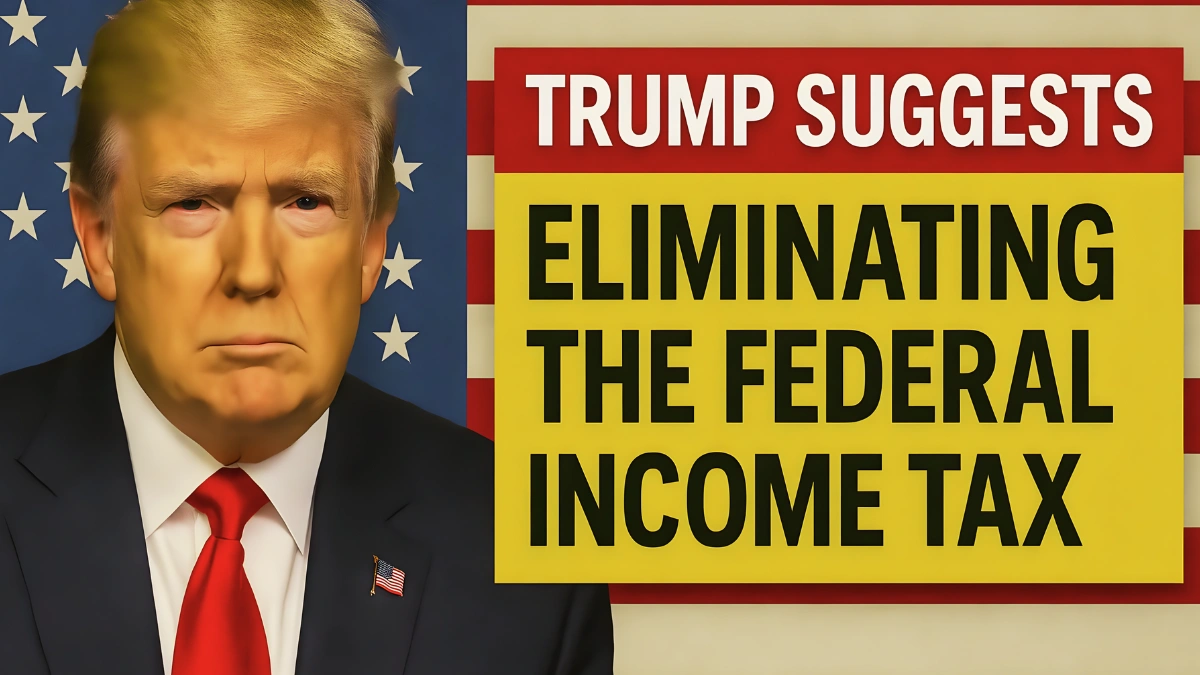
Trump’s Proposal to Eliminate Federal Income Tax: A recent proposal by former President Donald Trump has generated intense national discussion: the idea of eliminating the federal income tax. While not an enacted policy, the suggestion has fueled widespread conversation about how such a move could impact wages, government revenue, and the broader U.S. economy. The idea represents one of the most dramatic tax reforms ever publicly floated in modern American politics.
Why the Proposal Is Drawing Attention From Workers and Economists
Trump’s Proposal to Eliminate Federal Income Tax- Federal income tax is one of the largest sources of revenue for the U.S. government, funding essential programs such as defense, Social Security administration costs, healthcare initiatives, and national infrastructure. The suggestion to remove it raises significant questions about how the government would replace trillions in annual revenue. Supporters see it as a way to increase take-home pay and simplify taxation, while critics warn of funding shortfalls and economic instability.

Who Would Be Most Affected by Eliminating Federal Income Tax
If such a proposal were ever adopted, its impact would be felt by nearly every working American. Wage earners would see immediate changes in net pay, while retirees, families, and small businesses could face indirect effects depending on how the government compensates for lost revenue. Depending on the replacement system—such as a national sales tax or consumption-based model—the distribution of tax responsibility could shift significantly across income groups.
Potential Effects, Revenue Concerns, and Policy Questions Explained
Below is a neutral breakdown of the core issues raised by the proposal:

| Category | Federal Income Tax Elimination Overview |
|---|---|
| Current System | Federal income tax collected on wages and earnings |
| Proposed Change | Removal of the federal income tax entirely |
| Key Impact | Higher take-home pay but major revenue gaps |
| Replacement Ideas | National sales tax, tariffs, consumption-based systems |
| Purpose | Simplify taxation and boost worker income |
How Such a Policy Could Transform the U.S. Financial Landscape
Removing federal income tax would require restructuring how the government funds essential services. A national sales tax or consumption tax could shift the burden from income to spending, potentially affecting lower-income households differently than higher earners. Economic models suggest such a change could influence inflation, consumer behavior, and business costs. Any major tax redesign would require congressional approval and significant planning to avoid disrupting government operations.
Final Verdict: A Controversial Idea With Far-Reaching Implications
Trump’s suggestion to eliminate the federal income tax marks one of the most provocative policy ideas in recent tax discussions. While not an official plan, the proposal has sparked major debate about fairness, economic stability, and government funding. Whether or not it advances politically, the conversation highlights growing public interest in tax reform and the future structure of the U.S. economy.

Disclaimer: This article is for informational purposes only and does not provide legal, financial, or political advice. No official policy eliminating federal income tax has been enacted. Any future changes would require congressional approval and formal legislation.