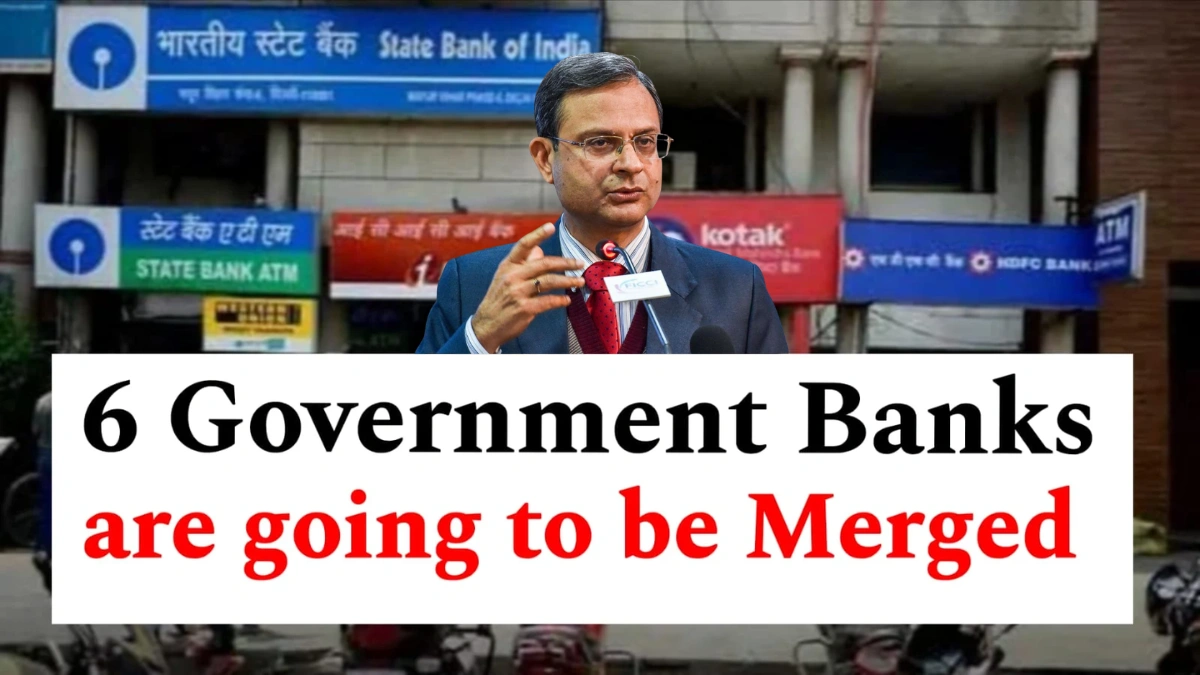
The government has officially announced a major banking merger plan involving six public sector banks. This strategic move aims to strengthen the banking system, improve financial stability, and enhance operational efficiency across the public sector network. Once the merger is implemented, customers of the affected banks will experience updated account processes, new IFSC codes, and consolidated branch services.
Why the Government Is Merging These Banks
The primary goal of merging these public sector banks is to create stronger, more efficient financial institutions capable of managing large credit demands. Mergers help reduce duplicate operations, improve digital infrastructure, and enhance the ability of banks to offer better services with lower operational expenses. This consolidation also helps stabilize weak banks by combining them with stronger institutions.

| Detail | Bank Merger Update 2025 |
|---|---|
| Total Banks Involved | 6 Government Banks |
| Type | Public Sector Bank Merger |
| Purpose | Reduce operational cost, improve efficiency |
| Impact on Customers | New account mapping and IFSC changes possible |
| Official Status | List released by Government |
| Expected Implementation | Financial year 2025–26 |
Which Banks Are Included in the Latest Merger List
According to the latest government notification, six public sector banks have been identified for structural consolidation. The final mapping of anchor banks and merging banks will be completed before the new financial year. Customers will be informed about any changes in branch operations, account numbers, or service procedures after the merger is formally executed.
How the Merger Will Affect Customers
Customers of the banks involved may experience updated account details including new IFSC codes, branch codes, and cheque book replacements. All existing deposits, loans, and schemes will automatically shift to the merged entity without impacting customer rights. Mobile banking and net banking platforms may undergo temporary updates during the transition phase.

Important Points Every Account Holder Should Know
This is the only bullet section included in the article:
- Customer accounts will be automatically transferred to the new bank
- IFSC, MICR, and branch codes may change after merger completion
- Existing deposits, loans, and EMIs continue uninterrupted
- Updated cheque books and passbooks may be required
- Customers must verify SMS or email updates from the bank
Benefits Expected After the Merger
With fewer but stronger banks operating nationwide, the financial system is expected to become more stable. Larger banks can offer better loan services, updated digital tools, improved customer support, and greater credit availability for MSMEs and individuals. Consolidation also helps reduce financial risk during economic slowdowns.

Conclusion:
The announcement of merging six government banks marks a major milestone in India’s banking reform strategy. With the government releasing the official list, customers should stay updated and prepare for minor changes in account services. The long term outcome of the merger is expected to create stronger, more efficient, and more secure public sector banks.
Disclaimer: Details may change as the merger process develops and official notifications are updated.
